Benefits of Credentialing Services for Clinics
September 14, 2026
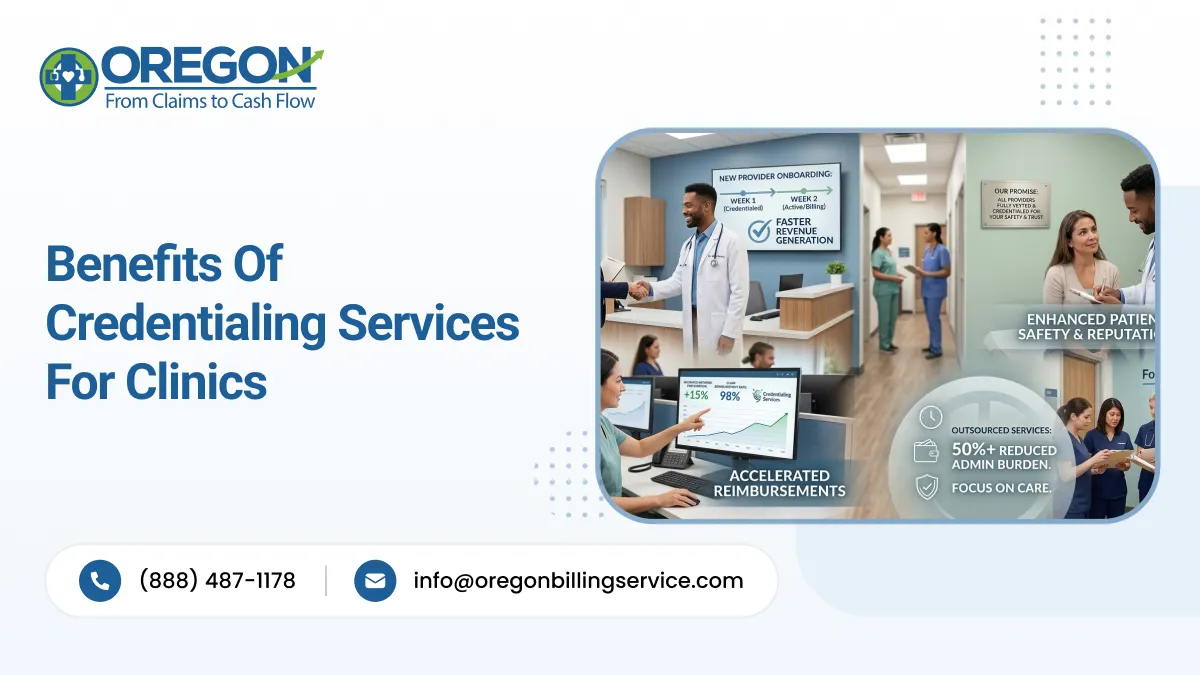
A provider can be licensed, qualified, and ready to see patients, yet your clinic may still have to wait for payer enrollment and credentialing to catch up.
That gap can affect more than a provider’s start date. It can complicate onboarding, payer participation, scheduling, administrative workload, and revenue planning.
For growing clinics, the real question isn’t simply “Who handles credentialing?” It is “How can we keep credentialing from slowing down the rest of the practice?”
Credentialing may start with one provider and a manageable number of payer applications. As your clinic grows, the workload changes. More providers mean more applications, more documents, more payer requirements, more CAQH updates, and more deadlines to monitor.
Your practice administrator may already manage scheduling, staffing, compliance, patient access, and other operational responsibilities. Credentialing can become difficult to keep moving when those priorities compete for the same time.
MGMA’s 2026 Regulatory Burden Report ranked Medicare and Medicaid credentialing among the top regulatory burdens reported by medical groups, highlighting how administrative requirements continue to consume practice resources.
Each payer may have its own enrollment process, documentation requirements, forms, and follow-up expectations.
A new address, license, specialty, practice location, or other provider detail can create additional work when several systems need updates.
Getting a provider credentialed does not end the administrative work. Clinics must continue monitoring expirations, recredentialing requirements, and payer updates.
Submitting an application represents only one stage of the process. Someone still needs to know what happened after submission.
The value of credentialing support becomes easier to understand when you start with the problems clinics actually encounter.
Credentialing rarely disappears from the workload just because the team has other priorities. It usually waits until someone has time to return to it.
That can create a cycle of:
collect information → pause → request missing information → follow up → update information → follow up again
For a clinic adding several providers, this process can quickly become difficult to manage consistently.
If provider enrollment tasks sit between administrative responsibilities, your clinic may struggle to answer simple questions:
The problem isn’t always a lack of effort. Sometimes the clinic simply lacks a clear system for keeping every application moving.
Credentialing and payer enrollment often work together, but they do not represent exactly the same task.
Credentialing focuses on verifying a provider’s qualifications and professional information. Payer enrollment connects that provider with a health plan so the provider can participate according to the payer’s requirements.
That distinction matters because a clinic can complete one part of the process while another step still needs attention.
NCQA emphasizes credentialing as an important part of verifying provider qualifications and supporting efficient, accurate healthcare operations.
A clinic does not necessarily need to hand every administrative responsibility to an outside service. The bigger benefit comes from creating a process that gives credentialing its own structure.
A well-organized workflow can help your clinic:
Provider data sits at the center of credentialing.
When information differs between CAQH, payer applications, licenses, practice records, and other systems, your team may need to spend additional time identifying and correcting discrepancies. CAQH’s Provider Data Portal gives providers and practice managers a centralized way to maintain information and documentation and share data with participating health plans.
Not every credentialing delay comes from the payer; some delays begin inside the clinic.
A missing document, outdated provider detail, incomplete application, or unanswered payer request can keep the process moving slowly. A structured credentialing workflow gives your clinic a better way to catch those issues before they turn into prolonged follow-up.
Credentialing does not create revenue by itself. The connection is more practical.
Your clinic needs providers to participate with the payers that matter to your patient population. Delays in credentialing or enrollment can interfere with provider readiness and make revenue planning more difficult.
Note: That finding does not mean every credentialing delay produces the same financial result
Waiting until a provider arrives can leave your clinic trying to complete payer requirements while also preparing for the provider’s first appointments.
Starting earlier gives your team more room to identify missing information, respond to payer requests, and monitor enrollment progress.
Collect the information your clinic expects to use throughout the credentialing process.
Check for missing or inconsistent details before submitting applications.
Make sure the provider’s profile and supporting documentation remain current.
Determine what each relevant payer requires for enrollment.
Complete and submit applications according to each payer’s process.
Maintain visibility into submission dates, requests, responses, and pending items.
Contact payers when applications need clarification or status updates.
Verify the provider’s enrollment status before relying on it for operational planning.
This is where many clinics underestimate the ongoing work.
Credentialing doesn’t end when the payer accepts the provider. Your clinic still needs to maintain accurate information and respond to recredentialing requirements.
CMS says most Medicare providers and suppliers generally revalidate every five years, although CMS can also request off-cycle revalidation. Failure to complete required revalidation can lead to a hold on Medicare reimbursement or deactivation of billing privileges.
Your practice can create a simple maintenance process around:
Outsourcing doesn’t make sense for every practice. It becomes more worth considering when credentialing starts competing with the work your internal team needs to prioritize.
01 — You’re Adding Providers
More providers mean more applications, documents, payer requirements, and maintenance.
02 — You’re Expanding Payer Participation
Each additional payer can introduce another set of enrollment requirements.
03 — Your Team Keeps Chasing Application Status
Repeated follow-up can consume administrative time without improving patient care.
04 — Recredentialing Keeps Sneaking Up
If deadlines live in individual calendars or inboxes, your clinic may struggle to maintain consistent visibility.
05 — Provider Onboarding Takes Too Long
Credentialing problems can become part of a larger onboarding delay.
06 — Your Clinic Is Growing Faster Than Your Administrative Processes
Growth can expose weaknesses in processes that worked when the practice was smaller.
If your clinic decides to seek outside support, don’t judge a service only by whether it can “complete credentialing.” Look at how the service handles the entire workflow.
Can the service help maintain accurate provider information and supporting documentation?
Does it understand the enrollment requirements for the payers your clinic actually works with?
Can your practice see where applications stand?
Does the process include consistent follow-up rather than simply submitting an application?
Does the service help your clinic prepare for ongoing credentialing requirements?
Can your practice leadership understand what has been submitted, what remains pending, and what requires attention?
The biggest benefit may not come from completing one application faster. It comes from creating a process your clinic can repeat as the practice grows. A more organized approach can give your practice:
Better Visibility
Your team can see what has happened and what still needs attention.
Fewer Administrative Interruptions
Providers and practice leadership spend less time tracking down basic application information.
More Predictable Onboarding
Your clinic can start credentialing earlier instead of treating enrollment as a last-minute task.
Stronger Provider Data Management
Your clinic has a clearer process for maintaining information across credentialing and enrollment activities.
Better Scalability
A process that works for three providers can provide a foundation for managing a larger provider group.
Why is credentialing important for clinics?
Credentialing verifies provider qualifications and helps clinics maintain accurate payer and provider information.
How do credentialing services benefit healthcare providers?
They handle time-consuming tasks such as documentation, CAQH updates, payer applications, follow-ups, and recredentialing.
Can credentialing delays affect a clinic’s revenue?
Yes. Delays can postpone payer participation and affect when a provider can bill certain health plans.
What is the difference between credentialing and payer enrollment?
Credentialing verifies the provider, while payer enrollment establishes the provider’s participation with a specific health plan.
How can automated credentialing systems help clinics?
They can simplify tracking, organize provider information, monitor deadlines, and reduce repetitive manual work.
When should a clinic consider outsourcing credentialing?
Outsourcing can help when credentialing consumes significant staff time or becomes difficult to manage across multiple providers and payers.
Credentialing may start as an administrative requirement, but it quickly becomes part of how a clinic manages provider onboarding, payer participation, information accuracy, and ongoing operations.
The benefits of credentialing services for clinics become most meaningful when the process gives your practice better visibility, consistent follow-up, accurate provider information, and a reliable way to manage enrollment as your organization grows.