Best Practices for Point-of-Care CNA Documentation
April 24, 2026
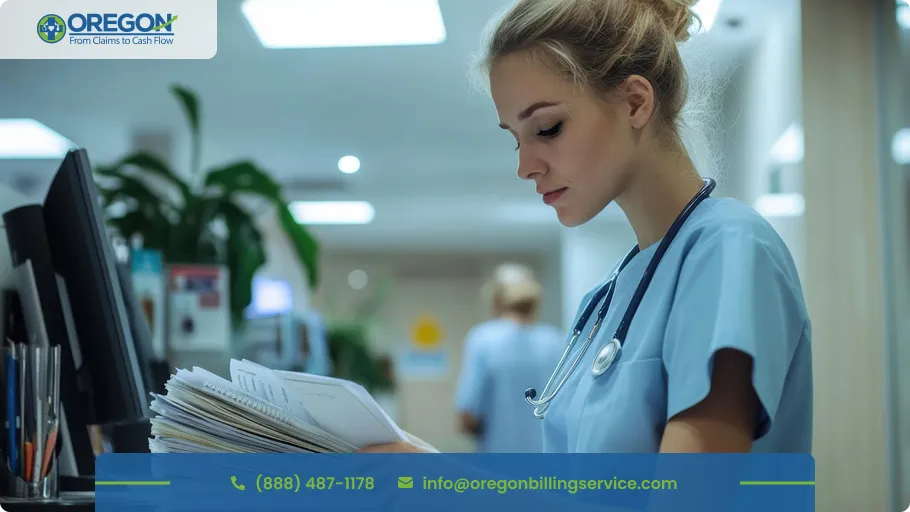
Documentation at the point-of-care CNA exceeds the technological frame. It entails documenting resident care at the precise time and place it is provided, such as the resident’s room, the bathroom, or the bedside, as opposed to hours later at a nurse station.
The distinction between these two things is essential for nursing homes. The medical record shows gaps because the charting process was not completed on time or in full. The gaps in records create survey deficiencies that disrupt continuous patient treatment and endanger payment processes.
A point-of-care CNA is a certified nursing assistant who uses a tablet, wall-mounted kiosk, or mobile device connected to the facility’s electronic health record to record care in real time. The CNA logs every task as they perform it rather than relying on memory at the end of the shift.
The point of care in nursing is simply the location of care. That is everywhere for CNAs, including the eating area, the shower, and the resident’s room. The chart is brought to that location by POC documentation. Nothing is overlooked. Nothing can be recreated from memory.
Accurate and timely documentation is a requirement for participation under CMS Requirements for Participation, not a recommendation. Smoother MDS coding and fewer deficiency citations are reported by facilities with POC documentation.
Your bottom line is affected by that final point. Reimbursement rates under the Patient-Driven Payment Model are contingent upon precise MDS data. That data is immediately fed via CNA charting. Regulators and payers consider care to be unprovided if it is not documented.
Point-of-care CNAs don’t make diagnoses. They don’t write prescriptions. However, their documentation is frequently the first indication of a change in status and the most thorough description of how treatment is provided on a regular basis.
Every shift, a POC CNA is responsible for documenting the following:
Real-time POC charting looks like this in practice:
The standard is always the same: document what you observed and what you did, in objective language, at the time it happened.
Good intentions are not enough. POC documentation must meet specific medical record documentation standards to hold up in audits, surveys, and legal reviews.
These are the mistakes that create compliance risk in nursing homes:
Follow these standards on every shift:
Residents are protected by robust point-of-care CNA documentation. It safeguards your employees. Additionally, it safeguards the revenue that keeps your facility running. Care teams react more quickly, MDS coding is clearer, and surveys run more smoothly when CNAs chart precisely and in real time.
At Oregon Medical Billing, we assist nursing facilities in ensuring that their documentation procedures comply with billing and legal standards. We can assist in closing any gaps in your revenue cycle caused by your POC documentation before they develop into deficiencies.
Q: What is a POC in healthcare?
Point of care in healthcare refers to the exact time and location where a provider delivers care — at the bedside, in the exam room, or anywhere direct patient interaction occurs — enabling real-time clinical decisions and point of care documentation.
Q: What is a POC in nursing?
In nursing, POC means delivering and documenting care at the resident’s location rather than at a central station, making point-of-care CNA charting more accurate, timely, and compliant with medical record documentation standards.
Q: What are the duties of a POC CNA?
A POC CNA assists with Activities of Daily Living, records vital signs, monitors skin condition, tracks intake and output, documents behavioral changes, and reports observations to the charge nurse — all captured through real-time POC documentation at the bedside.
Q: What documentation is within the role of the CNA?
CNAs are responsible for documenting ADLs, vital signs, resident refusals, skin observations, and behavioral changes through point of care practice documentation — factual, objective entries made in real time that directly support MDS coding, care planning, and reimbursement.